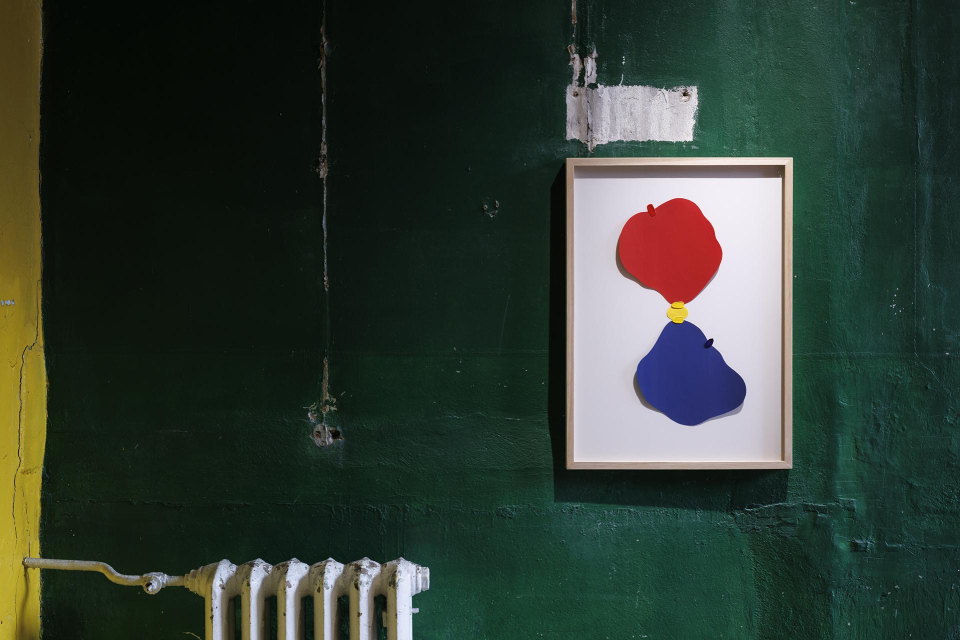
"Scholē"
Kim? festivāls “Ēdene: Saldie sešpadsmit” Hanzas iela 22, Rīga
Kuratores Zane Onckule (LV) un Alēna Klēra Feldmane (US)
07.06.–01.08.2025
Papīra un akrila krāsas griezumi. Riso druka uz papīra.
Grieķu termins scholē (σχολή) sākotnēji nozīmēja “atpūta” vai “brīvais laiks”. Taču tas nenozīmē pauzi vai atslodzi no darba; tas ir laiks vai dzīvesveids, kurā darbības tiek izbaudītas pašas par sevi. “Scholē nav vaļas laiks tagadējā izpratnē, brīvais bezdarbības laiks, kas paliek pēc dienas darba, “kurā apmierina eksistences vajadzības“. Nē, scholē ir tīša rīcība: no parastās darbošanās, ko nosaka ikdienas vajadzības, cilvēks tīši atturējās, tīši vairījās, lai nodotos vaļai, kas savukārt bija jebkuras citas darbības īstenais mērķis, kā miers Aristoteļa skatījumā bija īstenais kara mērķis. Atpūta un spēles, ko tagad uzskata par dabiskajiem vaļas laika darbības veidiem, toreiz piederēja pie a-scholia, pie nevaļas stāvokļa, jo spēle un atpūta ir nepieciešamas, tās atjauno cilvēku strādātspēju, kuras uzdevums ir gādāt par dzīves pamatvajadzībām.” (Hanna Ārente “Prāta dzīve”) Manuprāt, ir interesanti šādu laika pavadīšanas skaidrojumu attiecināt uz māksliniecisko praksi un pētniecību – uz laiku, kas pavadīts, lasot, rakstot, domājot un veidojot, un ko virza ziņkārība, vēlme radīt un saprast, kā arī interese par citiem māksliniekiem – gan laikabiedriem, gan mākslas vēsturē nozīmīgām personībām.
Vienā no izstādes telpām eksponētās riso drukas grafikas atklāj sērijas saikni ar izglītošanās procesu – visu “Scholē” kolāžu pamatā ir zīmējumi, kas tapuši kā doktorantūras lekciju piezīmes. Melnbalto kopiju materialitāte atgādina par nu jau novecojušiem pierakstu un grāmatu kopēšanas paradumiem. Spokainie nospiedumi atvērumu kreisajā pusē ir plānajā papīrā iesūkusī tuša no iepriekšējā zīmējuma, un pelēcīgās aprises raisa līdzību ar atmiņām – ar to, kā tās transformējas vai izbalē.
Sērijas “Scholē” darbu uzbūvē saskatāmi modernistu uzmanības centrā esošie grafiskās mākslas pamatelementi un pamatkrāsas; tiem pievienojas materialitāte un telpas dimensija. Punkts kustībā veido līniju, savienota līnija veido laukumu, un, ar skalpeli izsekojot zīmētās formas skeleta trajektorijai, laukums iegūst papildu dimensiju. Papīrā grieztās formas, piestiprinātas pie virsmas, pakļautas klimatam un gravitācijas spēkam, turpina teju nemanāmu kustību uz leju.
“Scholē” darbos lietotie formālie paņēmieni – kolāža, biomorfā abstrakcija, organiskas pamatformas, košas primārās un sekundārās krāsas, kompozīciju modulārā uzbūve un vizuālās valodas lakoniskums – ļoti tieši atsaucas uz modernistu un Bauhaus principiem, interpretējot tos “jaunās sirsnības” un postironijas garā. Līdzīgi kā metamodernisms, kas “svāstās starp moderno entuziasmu un postmoderno ironiju, starp cerību un melanholiju, starp naivumu un apziņu, empātiju un apātiju, vienveidību un daudzveidību, totalitāti un sadrumstalotību, skaidrību un neskaidrību,” (Timotheus Vermeulen & Robin van den Akker “Piezīmes par Metamodernismu”) arī “Scholē” lakoniskie attēli, sapāroti ar valodu, izgaismo uztveres elastību un rada augsni jaunam, spekulatīvam naratīvam. Šī neparastā situācija var rosināt mentālu ceļojumu laikā, ļaujot uz brīdi iztēlē izdzīvot pagātnes ainas vai iztēloties nākotnes scenārijus. Zīmējumi un kolāžas, izkārtoti intensīvos, laika nonēsātos skolas interjeros, atgādina izglītojošus vai informatīvus plakātus, kas, laikam ejot, zaudējuši savu sākotnējo didaktisko nozīmi un tagad ir atvērti jaunām interpretācijām.
/
“Scholē”
Kim? Festival “Eden: Coming of Age” Hanzas street 22, Riga
Curators Zane Onckule (LV) and Alaina Claire Feldman (US)
07.06.–03.11.2025
Paper and acrylic cut-outs. Riso print on paper.
The Greek term scholē (σχολή) originally meant “rest” or “leisure.” Yet it does not signify a pause from work or simple recuperation; it is time – or a way of life – in which activities are enjoyed for their own sake. “Scholē is not leisure time as we understand it, the leftover spare time of inactivity after a day's work "used for meeting the exigencies of existence," but the deliberate act of abstaining, of holding oneself back from the ordinary activities determined by our daily wants, in order to act out leisure, which in turn was the true goal of all other activities, just as peace, for Aristotle, was the true goal of war. Recreation and play, in our understanding the natural activities of leisure, belonged, on the contrary, still to a-scholē, the state of being deprived of leisure, since play and recreation are necessary for the restoration of the human labor force charged with taking care of life's necessities.” (Hannah Arendt “The Life of the Mind”) To me, it is interesting to apply this understanding of time to artistic practice and research – to time spent reading, writing, thinking, and making, driven by curiosity, the desire to create and understand, and an interest in other artists – both contemporaries and in art history.
The riso-printed graphics exhibited in one of the exhibition rooms reveal the series’ connection to processes of learning: all the “Scholē” collages are based on drawings made as notes during doctoral lectures. The materiality of the black-and-white copies evokes now-outdated habits of copying notes and books. The ghostly imprints on the left-hand pages are ink that has seeped into the thin paper from the previous drawing, and their greyish outlines recall memories – how they transform or fade.
In the construction of the “Scholē” works, one can discern the fundamental elements of graphic art and primary colors that were central to modernist attention; to these are added materiality and a spatial dimension. A point in motion forms a line, connected lines form a plane, and by tracing the skeleton trajectory of the drawn form with a scalpel, the plane gains an additional dimension. The shapes cut from paper, attached to the surface and subject to climate and gravity, continue an almost imperceptible downward movement.
The formal strategies used in “Scholē” – collage, biomorphic abstraction, organic basic forms, vivid primary and secondary colors, a modular compositional structure, and the laconic quality of the visual language – refer very directly to modernist and Bauhaus principles, interpreting them in the spirit of “new sincerity” and post-irony. Much like metamodernism, which “oscillates between modern enthusiasm and postmodern irony, between hope and melancholy, between naivety and knowingness, empathy and apathy, unity and plurality, totality and fragmentation, clarity and ambiguity,” (Timotheus Vermeulen & Robin van den Akker “Notes on Metamodernism”) the laconic images of “Scholē,” paired with language, illuminate the flexibility of perception and provide ground for a new, speculative narrative. This unusual situation can prompt a mental journey through time, allowing one to briefly relive scenes from the past in the imagination or envision future scenarios. Drawings and collages, arranged within intense, time-worn school interiors, resemble educational or informational posters that, over time, have lost their original didactic meaning and are now open to new interpretations.